
17 days
Sports and outdoor experiences
Trip to Scotland and the Orkney Islands: 17 days in the heart of wild Scotland
From
2 500€
2 500€
MacLeod, O'Brien, Stewart, Jones, or Sinclair… Does your surname sound Scottish, Irish, English, or Welsh? Find out the origin of his surname It can become the starting point for a unique journey: traveling to the land of your name, visiting your clan's castle, or exploring the region where your name was most common. Based in the UK since 2012, we organize these bespoke "family name" trips. Here's how to discover the origin of a name and where to go.
In short: To find the origin of your surname, first look at its form. Names ending in Mac or Mc are often Scottish or Irish, those ending in O' are Irish, and names ending in -s or P (Jones, Price, Powell) are often Welsh. Next, check official records to see where the name was most common. Finally, visit the area: the clan castle, the county of origin, archives, and the village where those who bore your name lived.
The form of a name often provides a first clue. However, it is not always sufficient, as many names have been modified over the centuries, during emigration or by administration.
In Scotland, the prefix Mac It means "son of" in Gaelic: MacDonald is thus "son of Donald." Many of these names are linked to a Highland clan, such as MacLeod, MacKenzie, or MacGregor. Other very common Scottish names have no prefix, for example Campbell, Stewart, Murray, Robertson, or Fraser. To learn more, read our guide on...«history of Scottish clans.
In Ireland, Mac also means "son of", while O'’ It means "grandson" or "descendant of": O'Brien is thus descended from Brian Boru, High King of Ireland. Furthermore, many names lost their prefix under English rule, before some families reclaimed it. This is the case with Murphy, Kelly, and Sullivan, which were originally Ó Murchadha, Ó Ceallaigh, and Ó Súilleabháin.
In Wales, it used to be used ap ('son of'): ap Hywel became Powell, ap Rhys became Price and ab Owain gave Bowen. Then, many names were formed by adding an 's' to the father's first name, hence Jones, Davies, Williams, Evans or Roberts, among the most common in the country.
In England, surnames often derive from a profession (Smith, Taylor, Baker), a place (names ending in -ton, -ham, or -ley), a nickname, or the father's first name (Johnson, Wilson). Finally, others date back to the Norman Conquest of 1066.
It comes as a surprise to many French travelers: numerous British and Irish surnames have Norman origins. For example, the Bruce family, that of King Robert the Bruce of Scotland, takes its name from Brix, in the English Channel. Similarly, the name Sinclair is often linked to Saint-Clair, in Normandy. In Ireland, the FitzGeralds ("sons of Gerald") are descended from Anglo-Norman lords who arrived in the 12th century. Thus, discovering the origin of one's surname can also create an unexpected connection between France and the British Isles.
To find out where your name was most common, consult official records. In Scotland, ScotlandsPeople This allows you to search for a name in civil records and censuses. In Ireland, irishgenealogy.ie and the 1901 and 1911 censuses provide the distribution of names by county. Additionally, for Scottish names, the official tartan register often indicates the tartan associated with your family.
If you want to go further and find your ancestors themselves, read our guides for to rediscover his Scottish roots and rediscovering his Irish roots.
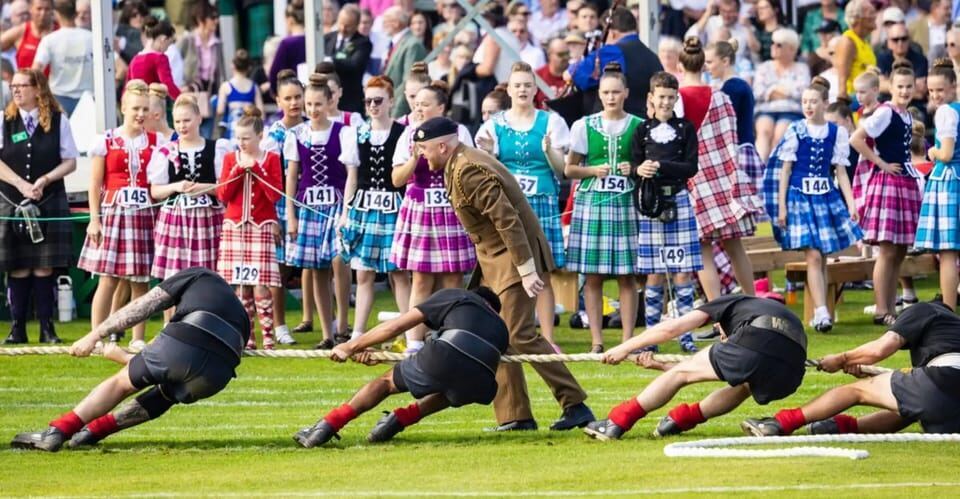
Once the origin of your name has been identified, the journey can take several forms:
Of course, each trip is built around your name. Simply send us your last name: our team will research the places associated with it and create a tailor-made itinerary for you.
Both are possible, as the prefix Mac exists in both Scottish and Irish Gaelic. For example, MacDonald is primarily Scottish, while MacCarthy is Irish. Records can show in which country the name was most common.
Traditionally, clan societies welcome people who bear the clan name or one of its associated names, as well as their descendants. In practice, the welcome is very open and the gatherings are often festive.
Often, yes. Emigration records, marriage certificates, and censuses frequently show the old spelling. Our team can help you arrange for a local genealogist to assist you.
Expect to pay from €1,300 per person for 7 days including accommodation, car and assistance, excluding flights. The price depends on the region and the planned visits.
In summary
Our local team creates your tailor-made itinerary in the UK and Ireland.
Written by our local experts
This guide is written and updated by the team at Brightside Travel, a bespoke travel agency based in Edinburgh since 2012 and Travelife certified for responsible tourism. Our experts live in the UK and design trips to Scotland, England, Wales, and Ireland every day. Meet our team.
Read also
Written by Anthony Cote, from the Brightside Travel team, a bespoke travel agency based in Edinburgh since 2012.
Updated on · Discover our experts
Your preferences are saved in this browser.